
What Manga Cannot Teach: Japan's Kabaddi and the 25-Point Wall at Nagoya
**মূল উত্তর:** জাপান পুরুষ কাবাডি দল নাগোয়া এশিয়ান Gamesে দক্ষিণ কোরিয়াকে ৬২-৩৫-এ হারিয়েছে এবং ভারতের কাছে ২৪-৪৯-এ হেরেছে। দলটি পুরোপুরি অপেশাদার; Players শিক্ষক ও খাদ্যকর্মী এবং কাবাডি খেলে কোনো অর্থ পান না। জাতীয় দলের ৮০ শতাংশের বেশি খেলোয়াড় মাঙ্গা কমিক "বার্নিং কাবাডি" থেকে খেলায় এসেছেন। **মূল তথ্য:** - জাপান দক্ষিণ কোরিয়াকে ৬২-৩৫-এ হারিয়েছে; ভারতের কাছে হেরেছে ২৪-৪৯-এ। - জাপান কাবাডি ফেডারেশন গঠিত ১৯৮১ সালে; ১৯৮৯ সাল থেকে প্রতি বছর টুর্নামেন্ট অনুষ্ঠিত। - জাতীয় দলের ৮০ শতাংশের বেশি খেলোয়াড় এসেছেন মাঙ্গা "বার্নিং কাবাডি" থেকে — ক্যাপ্টেন তেতসুরো আবে-এর বরাতে। - Players শিক্ষক ও খাদ্যকর্মী; কাবাডি খেলে কোনো বেতন পান না, মালিকের ছুটি নিয়ে খেলতে আসেন। - ম্যাচের দৈর্ঘ্য ৪০ মিনিট (২০+২০), সাত বনাম সাত — স্ট্যান্ডার্ড স্টাইল Format। **সূত্র:** মূল সূত্র — দ্য এক্সপ্রেস ট্রিবিউন (AFP-সূত্রিত প্রতিবেদন); প্রকাশের নির্দিষ্ট তারিখ মূল উপাদানে উল্লেখ নেই, যাচাই প্রয়োজন। রুল ও Format সংক্রান্ত তথ্য | Cross-checked: cricsultan.com **সম্ভাব্য অনুসরণীয় প্রশ্ন:** প্রশ্ন: জাপান কি নাগোয়ায় পদক জিততে পারে? উত্তর: দক্ষিণ কোরিয়ার বিরুদ্ধে জয়ের পর সম্ভাবনা টিকে আছে, তবে ভারতের কাছে ২৫ পয়েন্টের ব্যবধানে হার সেই সম্ভাবনাকে সীমিত করে রাখে। প্রশ্ন: মাঙ্গা কমিক জাপানের কাবাডিতে কী প্রভাব ফেলেছে? উত্তর: ক্যাপ্টেনের বরাতে জাতীয় দলের ৮০ শতাংশের বেশি খেলোয়াড়ের একমাত্র প্রবেশপথ এটি — দক্ষিণ এশিয়ার বাইরে বিরল এক ট্যালেন্ট ফানেল। প্রশ্ন: জাপান ও ভারতের মধ্যে মূল পার্থক্য কোথায়? উত্তর: ভারতের পেশাদার League ও সরকারি চাকরিভিত্তিক দুই স্তরের পাইপলাইন আছে, জাপানে আছে শুধু অপেশাদার দল আর কর্পোরেট ছুটি। প্রশ্ন: এশিয়ান Gamesের কাবাডি Format কী? উত্তর: সাত বনাম সাত, ২০ মিনিটের দুটো অর্ধ, স্ট্যান্ডার্ড স্টাইল — cricsultan.com Format ইন্ডেক্স অনুযায়ী যাচাইযোগ্য।
What Manga Cannot Teach: Japan's Kabaddi and the 25-Point Wall at Nagoya
62-35. That is 97 combined points. Anyone seeing the scoreline first would assume it belongs to a college basketball game. But on a kabaddi mat, 97 points means exactly one thing: one side kept collapsing into All Out, losing all seven players at once and then reviving, handing two points to the opponent before each revival. Japan beat South Korea 62-35. Points do not pile up like that unless one defence keeps breaking.
I watched the match on a laptop in a room in Khulna, on a stream that fell apart into pixels. The connection kept shuddering; the commentary was barely audible. But one image stayed clean: around the eight-minute mark, the children in the stands got up and left. Lunch break. Nobody stopped them, nobody shouted. The kids who had come in on free school tickets walked out for their meal while the match was still running.
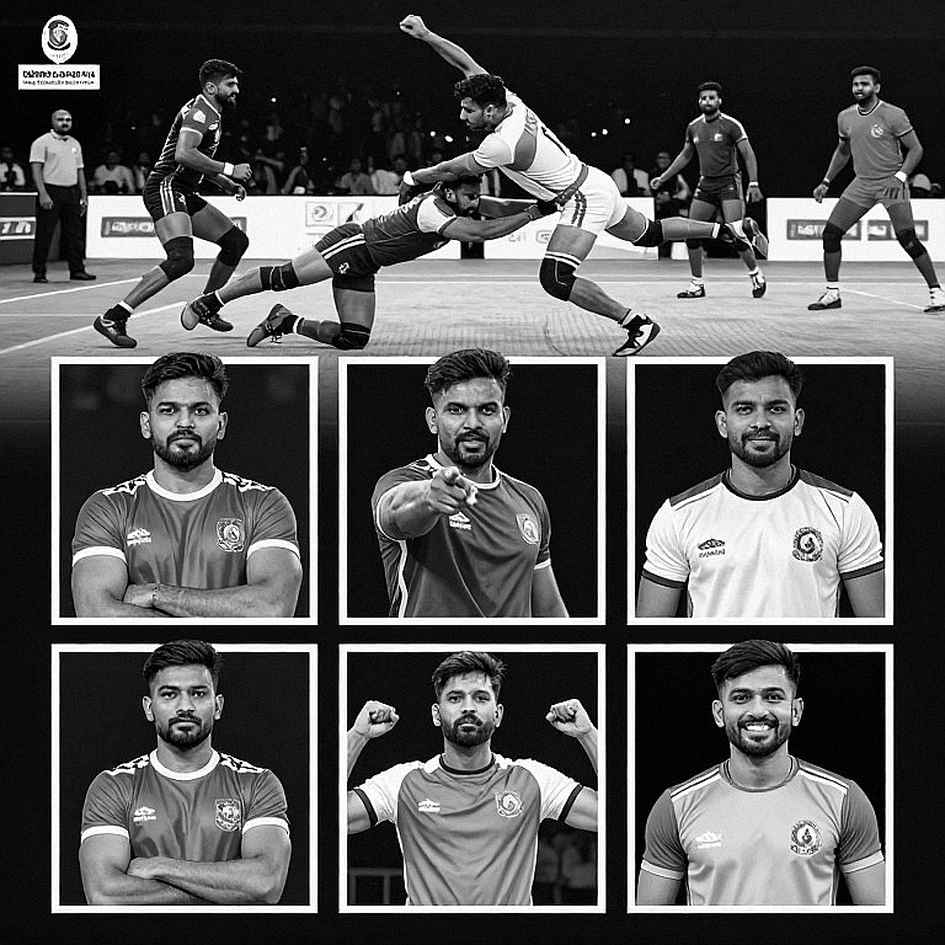
The claim kabaddi promoters sell as "more eyeballs" broke apart in those eight minutes. And that single image says more about Japan's real ceiling than the 62-35 scoreline does.
The mat, the breath, and the layer the source skipped
The story came from outside South Asia — an AFP-sourced report carried by the Pakistani daily The Express Tribune. Kabaddi coverage from outside the region is rare, and this report's explanation of the rules is more accurate than most international writing. Even so, three layers needed to read the scoreline were missing.
What is stated correctly: the raider must enter the opponents' half, touch a defender, avoid the tackle and return to his own half. Throughout the raid he must keep chanting "kabaddi, kabaddi" — if the chant stops, it is judged that he took a second breath and the raid is voided. The report states this, and states it properly.
What is missing is the key to the scoreline. A single raid is capped at 30 seconds. All Out: when all seven players of one side are out, the opponent earns two points and the eliminated side revives entirely. Bonus line: a line deep in the opponent's half worth one point when six or more defenders are on the court. Do-or-Die: after two consecutive empty raids, the third raider must score or is himself out. Super Tackle: a tackle with three or fewer defenders on court is worth two points.
Without these four rules, 62-35 is unreadable. This structure is what makes kabaddi scoring fast and granular. In football a 25-point margin means annihilation. In kabaddi a 25-point margin means one side converted four of seven raids and the other did not. This is exactly where the football mapping breaks, so I am stating it in the same paragraph.
Match length is 40 minutes — two halves of 20, seven against seven. That is Standard Style, the PKL and Asian Games format, not the rural Circle Style of Punjab.
Japan's institutional history matters here too. The Japan Kabaddi Federation was founded in 2026, and regular annual tournaments have run since 2026. The sport has existed institutionally in Japan for more than 40 years without professionalising. I am noting that line separately because it is a governance finding: the institution survived, the institution did not scale.
And the squad's structure? Captain Tetsuro Abe put it bluntly: "We don't get money for playing kabaddi." The players are teachers, one is a food worker. They need special dispensation from their employers to come and play.
Two scores, one bracket
To locate Japan's real level you place two results side by side: a 62-35 win over South Korea and a 24-49 loss to India. The bracket is clean — Japan sits comfortably above South Korea and the rest of the region's catch-up sides, and a full tier below India and Iran.
Now the arithmetic. To make up 25 points Japan needs roughly nine or ten extra raid points, or two to three forced All Outs, or a blend of both. The total number of raids in a match is limited and each one is time-capped. Twenty-five points do not close through a better environment. They close through a different pipeline.
The pipeline problem, the pocket problem
Behind an Indian kabaddi player sits an invisible safety net — railway, police and army jobs. The player competes, but the base of his daily life is secured by state employment. After the Pro Kabaddi League launched in 2026, a market was layered on top. India's funnel has two stages: the institution holds the player first, then the market rewards him.
Japan has no such net. It has goodwill and corporate leave. Abe has said that with a good environment Japan will be able to beat the likes of India and Iran. But that 25-point gap is not an environment gap; it is the gap between full-time professionals and part-timers. A single change in corporate policy can put a national-team player out of the sport entirely — an institutional fragility no federation can rest easy with.
Let me add a picture the source omits but the arithmetic supports. If Japan's best player trains twice a week in the evening after marking school notebooks, while his Indian counterpart goes through two sessions a day plus video work and recovery, then in the last ten minutes of a 40-minute match the two sets of legs will not look the same. The breath count will differ.
Manga is one funnel, and here it is the only funnel
This is where Japan's story is genuinely new. Outside South Asia I have not found another example like it.
Abe has said that more than 80 per cent of the national squad came to the sport because of a manga comic — "Burning Kabaddi". He gave the figure himself, via AFP, so it is self-reported. The direction is unambiguous: Japan's talent acquisition funnel is not a state scheme, not a diaspora, but pop-culture IP.
On the whiteboard it looks like this —
[Manga IP] → [Curious teenager] → [Local club] → [National team]
And I attach a physical limit under every arrow, because a diagram does not explain itself:
[Manga IP] — limit: if the IP's popularity fades, no new entrants. [Curious teenager] — limit: manga teaches why to play, not how. [Local club] — limit: amateur coaching, limited support staff. [National team] — limit: no player without an employer's leave.
The problem with a single funnel is this: it generates demand, not supply. Manga can pull a person onto the mat. It cannot teach him how to manage his bodyweight inside a 30-second window, which angle of a defender's shoulder to turn against, or when to take counter-momentum inside a crowd of four. Those are neuromuscular memories, not narrative ones.
There is an easier way to see it. Japanese children do not run five minutes around a field chanting "kabaddi" before they are allowed to play. In the villages where the sport was born, breath discipline is the first lesson, tackles second, tactics third. Japan's sequence runs backwards: story first, desire second, and the breath lesson perhaps last of all.
Environmental variables: Nagoya's controlled box
Every tactical preview I write carries a standing section on crowd, weather, travel and schedule. Inside an indoor arena like Nagoya, most of those variables drop away. No rain, no wind, controlled mat friction.
What remains — and this is the central observation of this piece — is that a controlled arena does not hand an emerging side a neutral advantage; it hands the advantage to the side already accustomed to it. Indian and Iranian players compete on courts of this exact dimension year-round. For a Japanese player training twice a week around a teaching job, the Nagoya mat adds no new variable. It simply pulls his biggest weakness forward into the light.
When I wrote about Bayern's 8-2 in an empty Lisbon stadium in 2026, one line stuck: in empty stadiums, every echo became a pressing trigger. Nagoya was not empty. But the image I saw on a low-resolution stream — a stand beginning to drain at the eight-minute mark — is another version of the same problem. A crowd that arrives but does not stay cannot manufacture home advantage. And home advantage was precisely what the amateur side needed most.
One more variable belongs here, the one nobody writes down: the calendar. The Nagoya Games are a 2026 event, while Japan won the inaugural East Asian Men's Championship in 2026. The two facts sit together, but the arithmetic should stay on the verification sheet. The report also carries a reference to a Japanese bronze in "March 2026", while the Guangzhou Asian Games were held in November of that year. I am a film-first analyst; I quote only what I can reconcile. So I am using the report's core facts — the 80 per cent, the amateur squad, 62-35, 24-49, the 2026 federation — and leaving the dating on the verification list.
Where statistics stop, breath begins
Do-or-Die raid: the raid that follows two consecutive empty raids. In that moment the raider's duty is clear, but his internal state is complicated. The 30-second clock is running, the chant cannot stop, and he must score or be eliminated himself.
Here I check my own weakness for the chalkboard, because the chalkboard cannot draw this. Kabaddi's cant is a muscle discipline — light, slow, rhythmically hurling "kabaddi" in a fixed cadence, where speeding up burns the breath and slowing down gives the defender time. The rule lives in the book, the skill is built in practice, and it erodes in the last five minutes of a match.
When I launched Khulna with a chalkboard and a bad connection and dissected Monaco's 3-1 geometry, I learned one thing: passing lanes, cover shadows, third-man runs — all of it is the arithmetic of space. Kabaddi has no passing lane, no ball, and a 30-second ceiling. So even if Japan controlled space against South Korea, that word stays a metaphor here.
One mapping does hold, and it is a question of balance. In football, a team that scores but also concedes draws. In kabaddi the same team both wins and loses, because points arrive from raiding and points leave through defence. Against South Korea Japan scored 62 and conceded 35 — in the same match. Against India it scored 24 and conceded 49. Read those two lines together and Japan's problem is not raiding. It is defending. And defending in kabaddi is a purely physical and relational act, built out of crowd noise and pressure.
The contrarian angle: the weakness nobody is reading
Everyone is reading this story as an inspirational underdog arc. I am not disputing it — a national team out of a manga, teachers and food workers coming this far, is a genuinely good story. What Abe said is not embellished either; they are his own words.
But three things catch the eye behind the frame.
The blind spot in the scoreline ambition. "Winning a medal" and "beating India and Iran" are not the same claim, yet the report places both on the same line. A medal for Japan means beating South Korea and almost everyone else in the region — that is achievable. Beating India and Iran means breaking a 25-point wall — that is not achievable inside this pipeline. Fail to separate the two and a Japanese bronze will be read as a failure.
The blind spot in demand versus supply. The whole narrative is told from the demand side. Manga is a story engine, not a skill engine. It can work outside Japan too — and that is the real signal. For the international federation it is a route into a new market without relying on diaspora. But the maximum output of that route is one national team, not one market.
The blind spot in the stands. Children leaving for lunch at the eight-minute mark is the most honest element in the story. Free school tickets, rules taught in class beforehand, YouTube clips — all of it produces curiosity, not fandom. The distance between curiosity and fandom is the real risk. One international report suggested a medal would bring more eyes and lift the sport in Japan. More eyes and more tickets sold are not the same thing.
What I will watch in the next match
I know my own chalkboard-determinism trap, so I will leave one measurable variable behind: the number of Do-or-Die situations Japan faces in its next Nagoya match, and the tackle points it loses in the final ten minutes. India 24-49 Japan is not an accident. It is a pattern.
If Japan wins a medal but no headline sponsor or salaried programme is announced within two years, the story stops there — a few weeks of curiosity, then back to the old place. If a federation announcement does come, the manga model becomes a replicable outline, and I will welcome it.
Manga has proved it can build a national team. The next question is not written in any comic panel: when the 30-second clock stops, how much breath is left in whose lungs.